
Peatix US
Designing Peatix for a new market
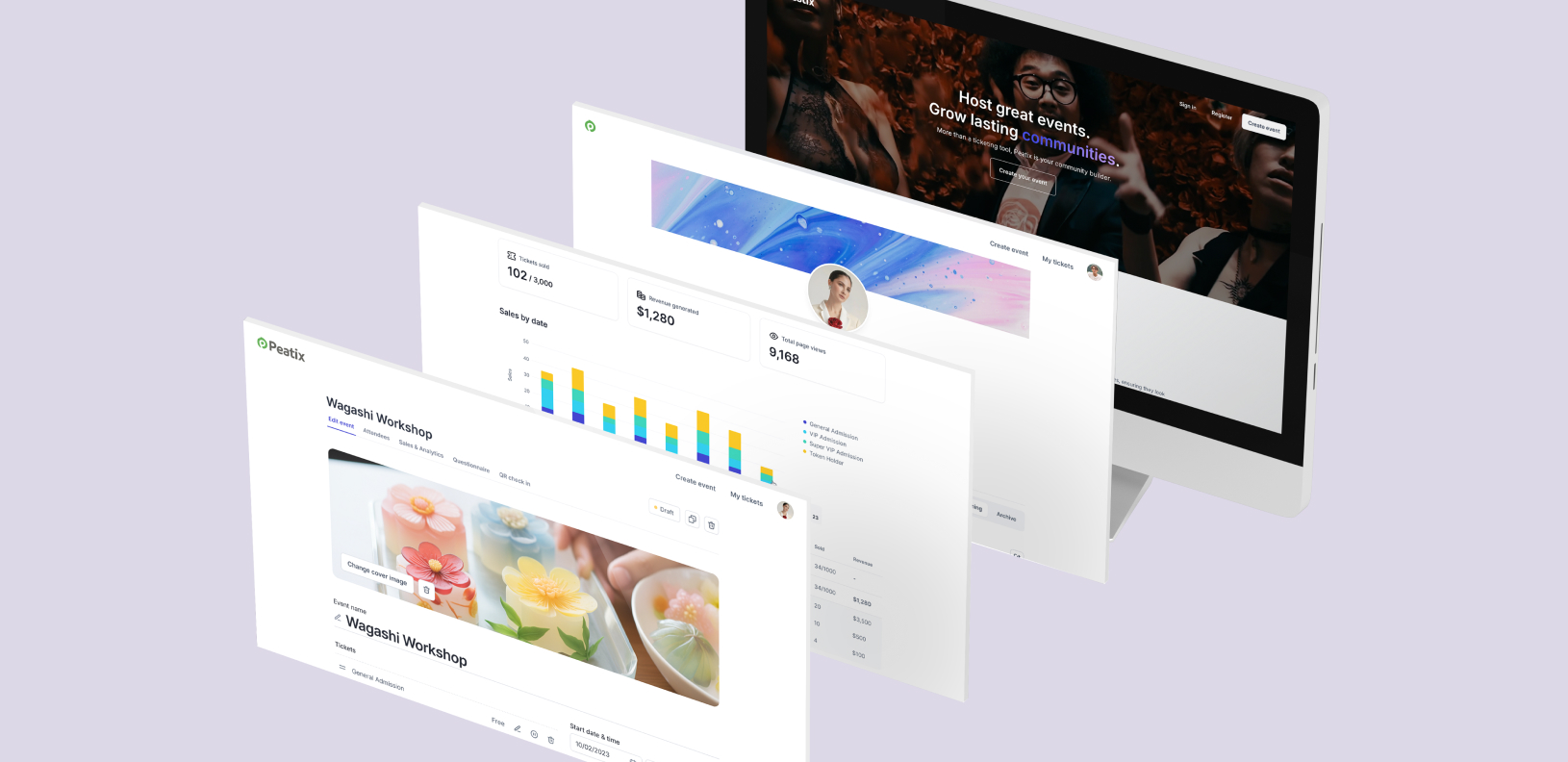
One month to launch a new event platform for the US. I led the design of an experience where organizers could describe an idea, generate an event page, and edit it right where the details would appear.
At a glance
A new product, a small team, one month
The opportunity
Launch a new US product for people interested in Japanese culture, building on Peatix's organizer relationships and audience.
My role
Sole designer, working with one PM and two engineers. I shaped the direction with the PM and designed the full experience.
What shipped
We launched within a month. Organizers could generate an event page from a short description, then edit its content and details in place.
The opportunity
Starting with a community we knew
Peatix was making a new push into the US, starting with people interested in Japanese culture. We had relationships with Japanese organizers, an interested audience, and organizers in the US planning special events with us. Cooking classes, language events, anime, manga, and traditional cultural events gave us a specific place to start.
The US already had plenty of event platforms. Those connections gave us a reason to be there, but we also wanted to offer organizers a different way to create their events. AI was becoming a competitive priority, and we saw an opportunity to make it useful in the work of putting an event page together.
We had room to rethink the product from the ground up. If the new experience worked well, it could eventually bring new features to Japan and replace the existing product there, too.
My role
Designing the whole experience
I was the Staff Product Designer and the only designer on the project. I worked with one PM and two engineers, with the PM and me making most of the product direction decisions together.
My work covered every screen, along with testing, logos, videos, and animations. We had one month to get through research, design, and launch, so deciding what belonged in the first version was a big part of the job.
Research and direction
An event idea is only the beginning
Organizer interviews, competitor research, and customer feedback informed the work. The problem we focused on was straightforward: someone could know what kind of event they wanted to host and still need help turning it into a page they could share.
They had to figure out how to describe it, what to charge, and what images to use. We wanted to let them begin by telling us what they already had in mind, then give them a page they could work with.
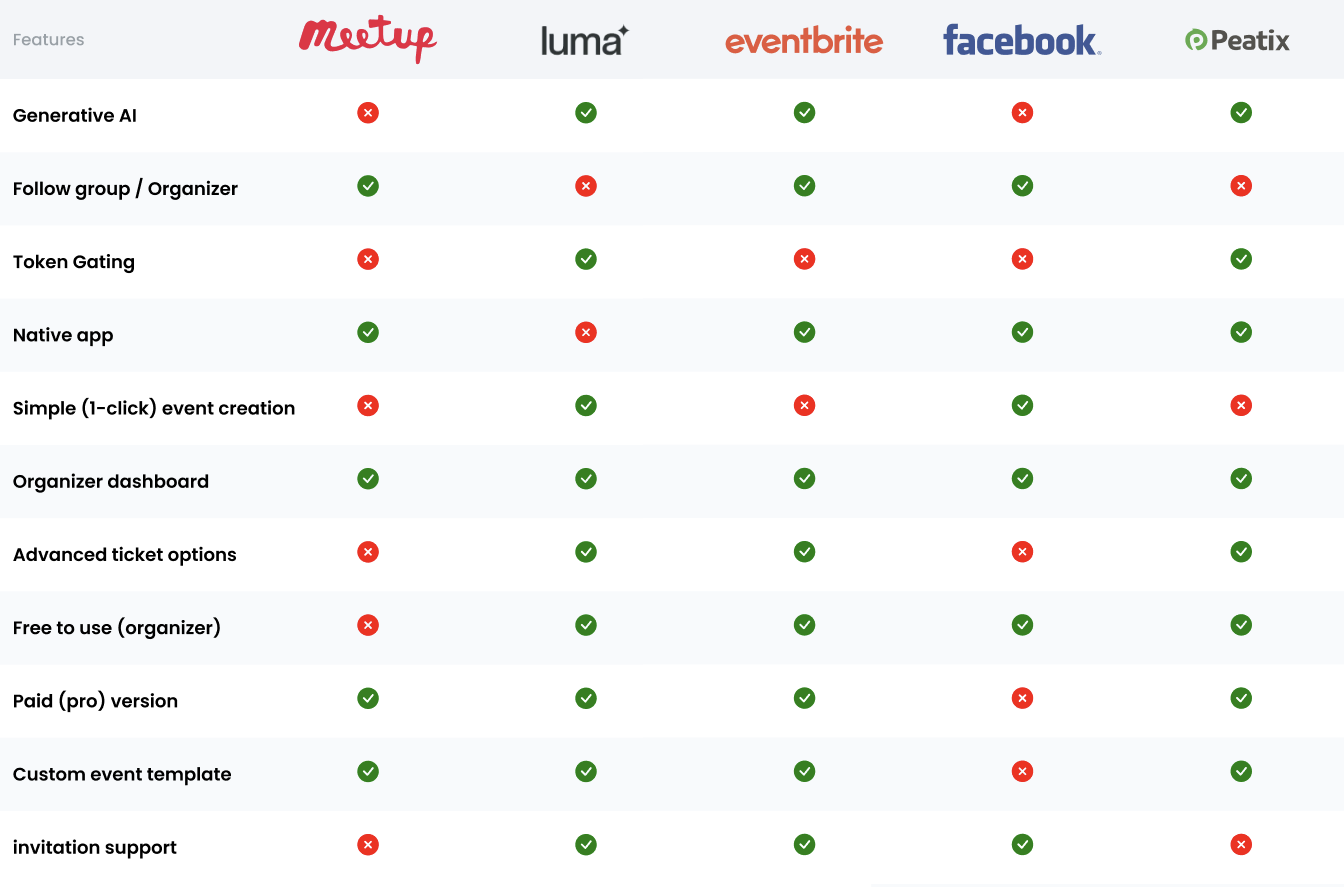
Competitor research helped inform the direction of the new event creation experience.
Event creation
From a sentence to an event page
An organizer could start with a short description of the event, including details like capacity, price, and date. For example:
“I want to host a cooking class for up to 30 people, charge $20 per person, and hold it on Saturday the 25th.”
AI would use that information to generate the event page, including its title and description. The organizer could start editing from there, with their idea already taking shape on the page.
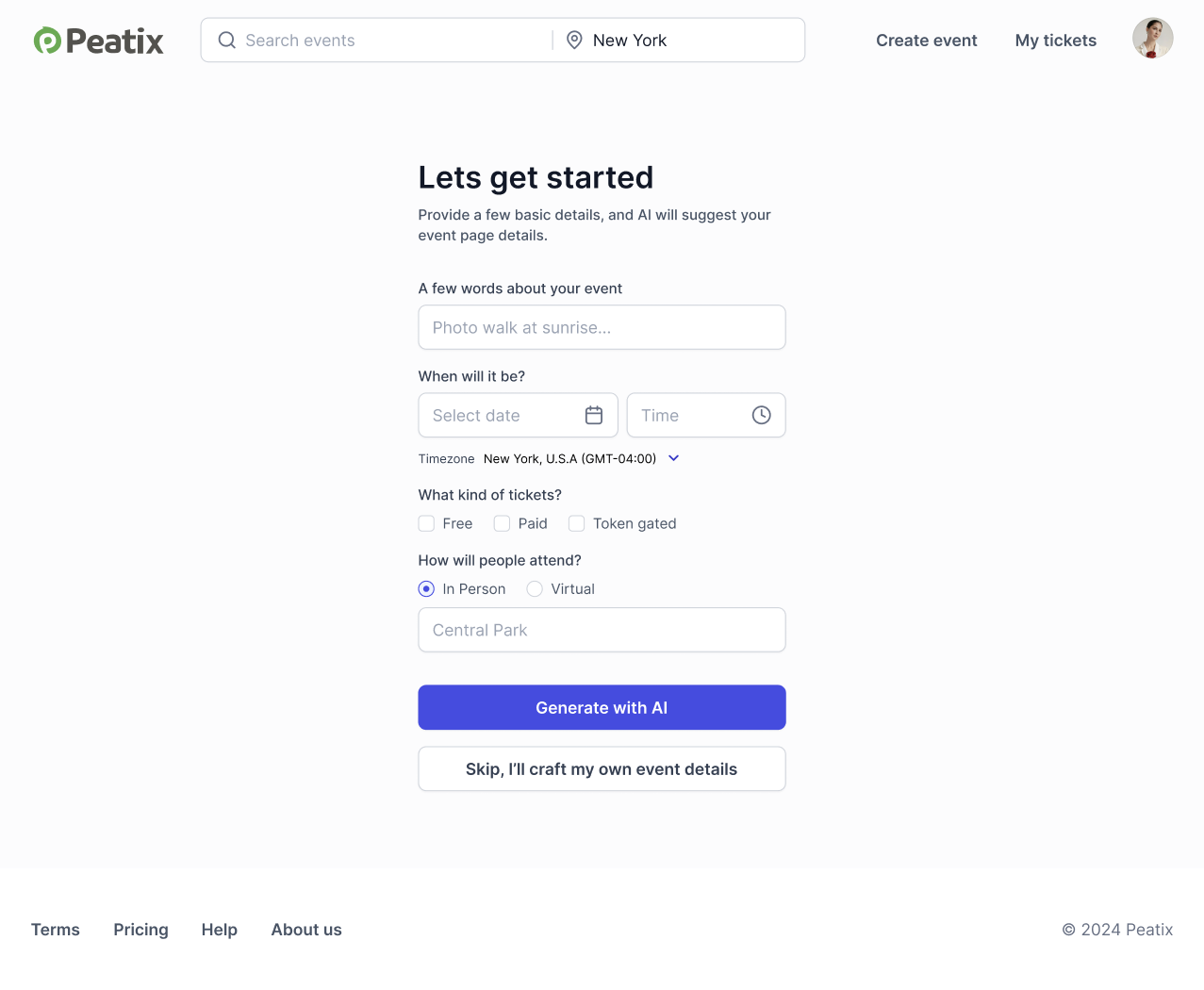
Organizers describe the event they want to host. AI turns that description into an editable event page.
The editor
Edit it where you see it
The part I was most excited about was what happened after generation. Organizers could edit the page in a layout that already showed how their event would look.
Text, prices, and event details were editable right where they would appear on the finished page. An input could sit in place of the final text, so the organizer could change the information and see it in context.
That connection between generation and editing was central to the experience. AI created the starting point, and the organizer could take over from there.
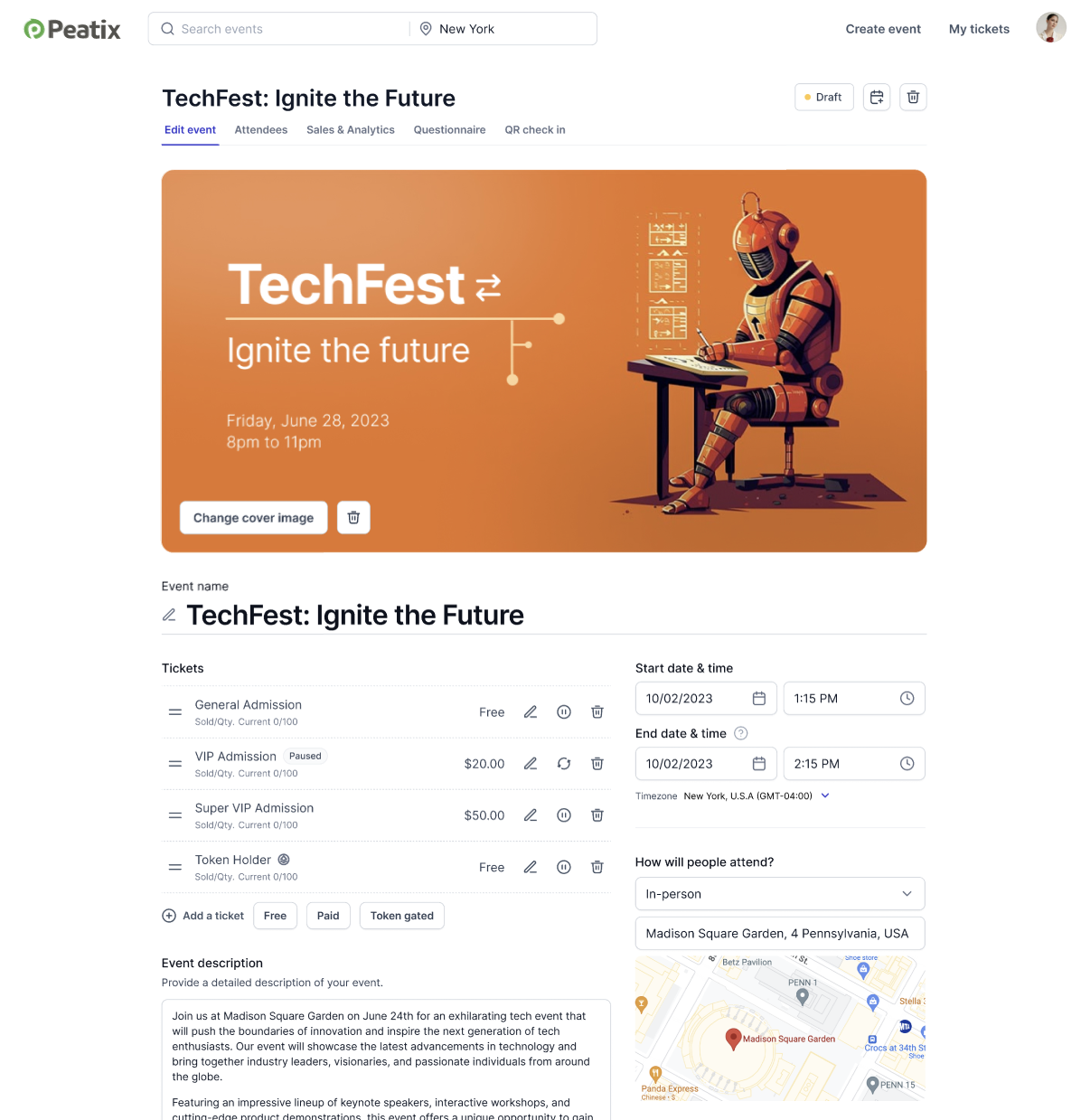
The page editor kept editable text, prices, and event details in the positions they would occupy on the finished page.
Tradeoffs
Choosing what could wait
The hardest decision was leaving page customization out of the first version. We wanted organizers to have themes and more control over how their events looked, but we needed to launch within a month.
The initial designs used a lot of white space with future themes and personalization in mind. For launch, we focused on getting the core creation and editing experience ready.
We also held off on AI-generated cover images. Each generated image carried a cost, and we wanted to assess demand before adding the feature. We later found that users preferred to use their own images, so generation wasn't necessary.
We could launch the core experience in a month. Giving organizers more ways to personalize their pages would have to come later.
After launch
Easy to create. More room to make it their own.
We met the deadline and continued improving the product over the following months. After launch, organizers told us it was easy to generate an event page. They also wanted more ways to customize it.
That feedback pointed back to the work we'd deferred. Organizers could get their event onto the page, and now they wanted to give it more of their own personality.
Customization hasn't shipped. Funding constraints and limited engineering capacity eventually prevented us from expanding the US product further.
1
Month from research and design to launch
1
Designer responsible for the full experience
1
PM partnering on product direction
2
Engineers building the product
Reflection
What this opened up for Peatix
For me, the most meaningful result was seeing AI work as part of the event creation experience. An organizer could describe an idea, get a page, and keep working on it directly. We had shipped that within a month.
It also gave us a direction to consider for Japan, Peatix's much larger market. The US project showed us how much more the creation experience could help organizers do, and what we might bring back to the wider product.
WHAT'S NEXT
Interested in working together?